

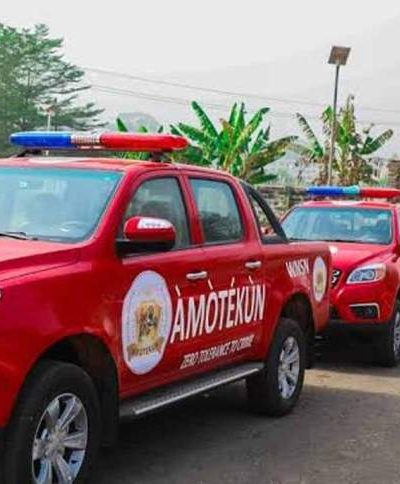
Al-Qaeda starting to make some inroads in North-West Nigeria – Commander US Special Operations Command, Africa
In a media briefing, MAJOR GENERAL Dagvin R.M. Anderson, Commander of the US special operations command, Africa, said Al-Qaeda is also expanding to other parts of West Africa.
In the remarks seen by Ekomiamiblog on the official website of the US Embassy & Consulate In Nigeria, Anderson said:
As we look at that, we will continue to engage with partners episodically in the littoral region and in West Africa, so from Senegal all the way down around through Nigeria. That whole region is under threat from what’s happening in the Sahel because we’re seeing it spread. That’s a great area where I believe we can engage with our civil-military support elements and talk about how to engage, how the military engages with the civilian populace. The key is the civilians need to have the trust and confidence that their military is there to protect and support them. When the military comes, they need to run to the aid of – run to the military and to their aid. So how do – how do we help train these militaries in that civil-military engagement? Because that’s where the terrorists look to engage. It’s very much a civilian-centric model, and they look to separate those populations from the government and from the militaries and to seek an alternative form of governance or an alternative to what that central state provides.
Some Nigerians called in to ask various questions during the brief. See the questions below:
- Mr. Immanuel Odeyemi of Classic FM, Nigeria, asked “How much is being committed to the fight against terror since the onset of the pandemic and beyond?”
- Mr. Bola Olajuwon from The Nation, Nigeria asked “With the current COVID-19 pandemic globally, how would you describe U.S. partnership with African governments in the area of tackling terrorism and insecurity?”
- Mr. Innocent Odoh: “It’s very disturbing that despite the U.S. multiple levels of assistance in Nigeria, violent extremism and terrorism continue to ravage the country with a surge in deaths and destruction. Why does the partnership with the U.S. appear to be failing Nigeria?”
Major General Dagvin’s Reply:
When it comes to Nigeria in general, Nigeria, obviously, is a critical nation to West Africa. It is huge just in its economy, in its population, and just its influence in the region. It is a critical nation and we realize that Nigeria is a lynchpin. For that to have an effect against the VEOs and to have an effect against these stressors, it really takes the Government of Nigeria to lead that effort and to build that energy to coalesce around. So no nation can come in and fix that problem for Nigeria. We can assist with that – and it’s the United States can assist, the United Kingdom, other countries can come in, many countries can come and assist with that partnership – but ultimately it takes leadership from Nigeria in order for us to focus our efforts. We need to understand where Nigeria wants to focus those efforts so we can partner appropriately to have the best effect.
We have partnered with great effect with Nigeria in counterterrorism in the past. We’ve had good engagements with their air force in particular and providing C-208 capability, which is a light, fixed-wing ISR [intelligence, surveillance, and reconnaissance] platform, very capable, and we’ve had good engagement. We’ve had good engagements with their air force in integrating their air force with their ground forces in order to make their air force more effective. Nigeria is a large country, it’s got a lot of territory to cover, and so it’s critical that they have that air component and that air engagement. So we have had positive engagements there.
Recently, the Nigerian coast guard went out and rescued some Chinese fishermen that were adrift out off their coast. That was a combination of engagement from the U.S., where the U.S. had engaged with their maritime forces and helped build their maritime awareness along their coast. And that was in partnership with their neighbors in Togo and Benin as well, who helped with that whole operation to understand the intelligence that led them to where these fishermen were, but then it was the unit that went out and did that was a Nigerian special operations unit that our Navy SEALs had trained a few years previously.
So sometimes it’s not the immediate effect, it’s the effect that happens two or three years later as you combine these engagements that have a greater effect later on. I know that’s just one small example and it’s not directly against terrorism, but being able to engage in that maritime domain and to be able to understand what’s going on out there is critical, and that has been an engagement the United States has had over several years with Nigeria and those other coastal states in both the naval and the special operations forces.
In a media briefing, MAJOR GENERAL Dagvin R.M. Anderson, Commander of the US special operations command, Africa, said Al-Qaeda is also expanding to other parts of West Africa.
In the remarks seen by Ekomiamiblog on the official website of the US Embassy & Consulate In Nigeria, Anderson said:
As we look at that, we will continue to engage with partners episodically in the littoral region and in West Africa, so from Senegal all the way down around through Nigeria. That whole region is under threat from what’s happening in the Sahel because we’re seeing it spread. That’s a great area where I believe we can engage with our civil-military support elements and talk about how to engage, how the military engages with the civilian populace. The key is the civilians need to have the trust and confidence that their military is there to protect and support them. When the military comes, they need to run to the aid of – run to the military and to their aid. So how do – how do we help train these militaries in that civil-military engagement? Because that’s where the terrorists look to engage. It’s very much a civilian-centric model, and they look to separate those populations from the government and from the militaries and to seek an alternative form of governance or an alternative to what that central state provides.
Some Nigerians called in to ask various questions during the brief. See the questions below:
- Mr. Immanuel Odeyemi of Classic FM, Nigeria, asked “How much is being committed to the fight against terror since the onset of the pandemic and beyond?”
- Mr. Bola Olajuwon from The Nation, Nigeria asked “With the current COVID-19 pandemic globally, how would you describe U.S. partnership with African governments in the area of tackling terrorism and insecurity?”
- Mr. Innocent Odoh: “It’s very disturbing that despite the U.S. multiple levels of assistance in Nigeria, violent extremism and terrorism continue to ravage the country with a surge in deaths and destruction. Why does the partnership with the U.S. appear to be failing Nigeria?”
Major General Dagvin’s Reply:
When it comes to Nigeria in general, Nigeria, obviously, is a critical nation to West Africa. It is huge just in its economy, in its population, and just its influence in the region. It is a critical nation and we realize that Nigeria is a lynchpin. For that to have an effect against the VEOs and to have an effect against these stressors, it really takes the Government of Nigeria to lead that effort and to build that energy to coalesce around. So no nation can come in and fix that problem for Nigeria. We can assist with that – and it’s the United States can assist, the United Kingdom, other countries can come in, many countries can come and assist with that partnership – but ultimately it takes leadership from Nigeria in order for us to focus our efforts. We need to understand where Nigeria wants to focus those efforts so we can partner appropriately to have the best effect.
We have partnered with great effect with Nigeria in counterterrorism in the past. We’ve had good engagements with their air force in particular and providing C-208 capability, which is a light, fixed-wing ISR [intelligence, surveillance, and reconnaissance] platform, very capable, and we’ve had good engagement. We’ve had good engagements with their air force in integrating their air force with their ground forces in order to make their air force more effective. Nigeria is a large country, it’s got a lot of territory to cover, and so it’s critical that they have that air component and that air engagement. So we have had positive engagements there.
Recently, the Nigerian coast guard went out and rescued some Chinese fishermen that were adrift out off their coast. That was a combination of engagement from the U.S., where the U.S. had engaged with their maritime forces and helped build their maritime awareness along their coast. And that was in partnership with their neighbors in Togo and Benin as well, who helped with that whole operation to understand the intelligence that led them to where these fishermen were, but then it was the unit that went out and did that was a Nigerian special operations unit that our Navy SEALs had trained a few years previously.
So sometimes it’s not the immediate effect, it’s the effect that happens two or three years later as you combine these engagements that have a greater effect later on. I know that’s just one small example and it’s not directly against terrorism, but being able to engage in that maritime domain and to be able to understand what’s going on out there is critical, and that has been an engagement the United States has had over several years with Nigeria and those other coastal states in both the naval and the special operations forces.
More directly to his point, we have engaged with Nigeria and continue to engage with them in intel sharing and in understanding what these violent extremists are doing, and that has been absolutely critical to their engagements up in the Borno State and into an emerging area of northwest Nigeria that we’re seeing al-Qaida starting to make some inroads in. So this intelligence sharing is absolutely vital and we stay fully engaged with the Government of Nigeria to provide them an understanding of what these terrorists are doing, what Boko Haram is doing, what ISIS-West Africa is doing, and how ISIS and al-Qaida are looking to expand further south into the littoral areas.

Jadesola O
Hi, I'm Jadesola and if you've been here a while, you'll know that Ekomiami has always existed without a face. That changes now. I founded this platform in Lagos in 2018, originally as a space for entertainment and celebrity news. Over time and across continents my world grew bigger and so did my curiosity. Today, Ekomiami is what it was always quietly becoming: a home for travel, food, arts, and culture, told through the eyes of someone navigating the world from a very particular vantage point. With a background in content and media production. I write and create about the places I go, the food I find, and the experiences that make travel feel like more than a holiday. You'll find me in Bordeaux wine bars, on Albanian coastlines, in English market towns, and at restaurant tables taking notes between courses. The name "Ekomiami", "Lagos to Miami" has always been about movement, ambition, and showing up somewhere new. Seven years in, I'm stepping out from behind it. Welcome to the journey, properly.



Leave a Reply